


Some guitars combine fascinating stories about both their creation and acquisition, and this 1979 Gretsch TK 300 Model No. 7624 is one of those guitars! It was conceived during what many vintage Gretsch enthusiasts consider to be the low point in Gretsch history. It was purchased during one of the great guitar adventures of my career! But, is it any good?
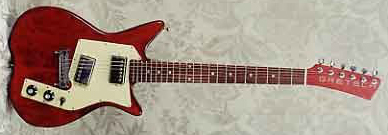
1979 Gretsch TK 300 Model 7624 Electric Guitar
Gretsch was founded in Brooklyn, NY, in 1883 by Friedrich Gretsch of Mannheim, Germany. He died a couple years later and the company was run by Fred Gretsch, Sr., until 1942. Bill and Fred, Jr., took over and when Bill died in ’48, Fred, Jr., was in charge. Most of Gretsch’s most famous guitars date from the 1950s, including the famous White Falcon that was promoted by touch guitarist Jimmy Webster in guitar demos offered at Gretsch dealerships throughout the country. Gretsches during this era were powered by DeArmond pickups and were undoubtedly cool!
Then along came the Swinging Sixties. Baby Boomers fused with the Beatles and suddenly you could sell every electric guitar you could make. Sensing gold in them thar hills, major corporations, some of which had nothing to do with music, stumbled over themselves to get into the guitar business. In 1965 CBS, with TV, radio and record company holdings, bought Fender. Ok. In ’67 Norlin, with a beer-making history, bought Gibson. In between both guitar manufacturers and distributors sold to corporations. Guild went to Avnet, an entertainment company. Kay went first to Seeburg, the jukebox company, and then to Valco. Jack Westheimer’s Teisco went to King Korn trading stamp company!
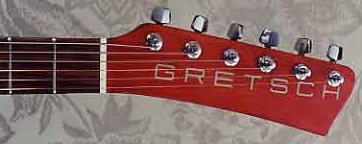
1979 Gretsch TK 300 Model 7624 Electric Guitar
Anyhow, Gretsch got caught up in the buying frenzy. Baldwin Piano and Organ Company of Cincinnati made a bid for Fender, but lost out to CBS. Then later in ’65 Baldwin bought Burns of London. Two years later, Baldwin added Gretsch to its portfolio. After that, Gretsch guitars began incorporating Burns features, like the “gear-box” neck adjustment and vibratos. To save money, in 1970 production was relocated to Booneville, Arkansas, and finally to DeQueen, AR. HQ moved to Cincinnati in ’72. Later that year the plant burned down, marking pretty much the end of the era acceptable to hardcore Gretsch freaks. Production didn’t really ramp up again until 1974, by now facing stiff Japanese competition. Baldwin was interested in capturing as much market share as it could.
In around 1978 Gretsch came up with a bunch of new models, including the ill-fated Committee (designed by same), as well as the Beast models (bitchin’ guitars), and this Bizarro TK, with the asymmetrical body and hocky-stick head. The hardware and pickups on these were made in Japan. This model may have been Gretsch’s first bolt-neck guitar model. The rising sun was about to set.
This particular TK came from my classic visit to discover the Temple of Doom, aka Bob’s House of Music in Wheat Ridge, Colorado. Bob owned a strip mall and instead of renting out the shops, filled them with guitars. More guitars than you can imagine. If you came in to buy one and tried to negotiate, Bob would drive the price UP, not go down. He didn’t sell much with this strategy. He also collected feral cats and wore cast-off thrift store clothes. I went out there to take pictures of guitars, and came home with this as one of my prizes. No, it was a fair price but no bargain. What would you expect?
Collectors who like Corvettes or Mr. Chets or Falcons disdain these later Gretsches, but if you ignore the history, these are really nice guitars. The necks are slim and fast. They’re light-weight, which is good if you’re older like me (or like to jump off amps). And the Japanese pickups are HOT, HOT, HOT. These are great guitars. In a popular guitar context.
Gretsch died shortly after this adventure, though it would return as an import later. But if you’re interested in good guitarflesh that, like Rodney Dangerfield, don’t get no respect, but is quite respectable, you might want to keep your eyes open for a TK 300!
I think Eastwood should do one of these…
i love the TKs. i think they are beautiful. i still have the original 1979 Gretsch catalog that i got back in middle school that these were in. my #2 favorite Gretschy ever, behind the White Falcon Junior.
i’m really surprised that, with the exception of adrian belew, other “pros” cannot see the beauty and playability of this guitar. Please michael eastwood, make one of these in a shortscale bass (and guitard!)Now if only I can hunt down that olde photo with adrian holding one one of these…
I have a blonde? tk-300 in fair condition..strung with Gibson flat wounds (tones it down a little, but VERY smooth) I LOVE MY GRETSCH!
Well, if Eastwood does these, I am definitely gonna buy one.
I had this exact guitar in my store ! ! ! Bought it from Lou Parsley Music in Victoria, texas about 1979, then kept it in my studio/music store in Stamford, texas for nearly twenty years. Didn’t have but maybe a hundred hours of playing on it. Traded it for a Chevrolet hot Rod xix cylinder engine for my 65 Chevy pickup………….still have it, but I’d rather have the 300 back !!!! Live and learn……..KEEP YER AXES ! ! !
I had a blonde tk300. I got it as a high school graduation present in 1980. I loved it. Unfortunately it was stolen in 82. I would love to find another.
I have a red tk300 that has the looping stylish signature ” Brad Polston” wriiten on the face of the headstock. It was put on before the clear coats and before the tuners, and so, it looks to be done at the factory. Any Idea who this was? Google searches turn up nothing guitarist related.
I bought one brand new the same color as the pic. Really wish I still had it, can’t even remember if I sold it or traded it cause it must’ve been 35 years ago, dang!
I have the TK300 bass Guitar – love it. I also have a 1978 Committee and the 1975 7606 Broadcaster as well as a Baldwin era 6070 Country Gentlemen.
It is a good thing people labour under the belief these were poorly made guitars. They are beautiful instruments that do not give a nod (except the 6070) to the traditional Gretcsh shape.
But has anyone ever seen the 1972 gretsch 7615 solid body bass?
I have one right now. The bridge pickup is microphonic. I had it removed and replaced it with a mini-humbucker. It’s a cool guitar. The op to get it was really cool because it came with the paperwork and original hardshell case.
I have one of these I bought new in 1979- blond color. Played it all through high school and into my mid/late 20’s before I started having issues with the wiring (lots of rough travel and treatment). I am taking it to a local guitar shop that I have heard good reviews on to bring it back up to speed. I have really missed playing this old guitar and want to get it back into my rotation!
I bought one in 1980 ,and we are still together and both happy.I love it’s sound.
I have a red TK300 bass. My best friend saw it at a garage sale a couple blocks from our houses and ran to my house to tell me he “found my bass”, I had a job so I had some money, and borrowed 4o bucks from my mom, and didn’t think twice. I wasn’t used to the feel of the frets being so close together, so I took them out with a butter knife. That was 1983 and I still haven’t filled the neck. It plays like a cello. What a great bass,
Anyone know what the volume of the production run was? Was it just two years of production, ’79-’80?
I have a tk300 blonde bass I bought new, I was thinking mid 70s, but 79 was the first year It has original strings. No ware no scratches ,Hard case. Make a offer.
Does anyone know what set of pickups would fit to the tk300 guitar?
Please let me know if you’re looking for a article writer for your site.
You have some really great articles and I think I would be a good asset.
If you ever want to take some of the load off, I’d really like to write some articles for your blog in exchange for a link back to
mine. Please blast me an email if interested. Many thanks!