


The Seventies was the era of Classic Rock, so it’s not surprising that so many new guitar brands were flourishing then. But it was a less innocent time than the Sixties, and it soon became known as the “Lawsuit Era”. Here’s all you need to know about all the best, the most badass, and the most copyright-infringing guitars of the time.
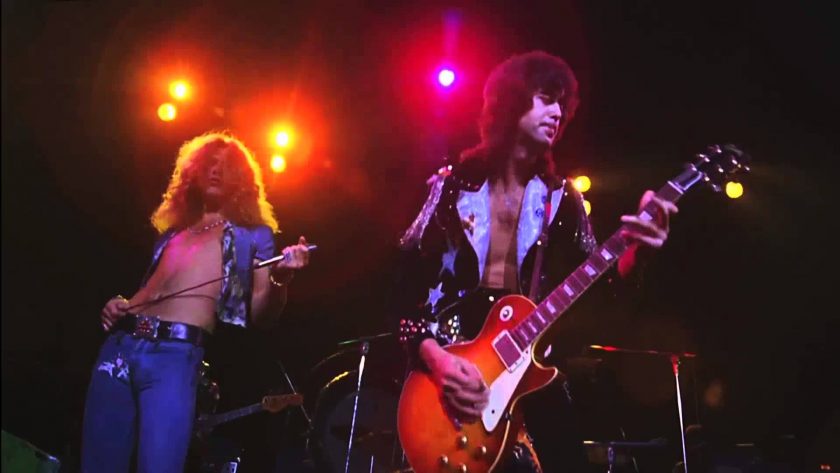
Led Zeppelin helped to popularise the Les Paul in the 70’s, when many great copies were made
Two major issues defined the progress of electric guitars for most of the seventies. 1) Companies outside North America vastly improved the quality of their guitar manufacturing and 2) Companies inside North America – namely Fender and Gibson – took their eye off the ball and did exactly the opposite.
By this time, many guitar manufacturers from the Far East had 10+ years experience under their belts, and the improvement in quality began to shine through. Univox, Kawai, Silvertone and Domino were starting to deliver guitars that – from a price / quality point of view – were beginning to eat into the markets that Fender and Gibson dominated. Not only was the manufacturing quality improving, but the quality of the REPLICATION was reaching new highs. The lawyers at Gibson started to get restless, and young guitar players like myself were also getting restless… I could not wait to go out and buy a UNIVOX Les Paul for 1/5th the price of the real thing! Damn, it was so inexpensive that I could almost afford to smash it on stage! Cool! But as the saying goes, all good things must come to an end.
Towards the end of the 1970’s, Fender and Gibson were loosing market share. That is why we hear so much about the “Lawsuit ERA” guitars. Late in the seventies, Gibson Guitars won a legal battle for patent infringements, which over time, shut down all but a few “copy” guitar manufacturers worldwide. This allowed some elbowroom for Gibson and Fender to rethink and retool their operations to fortify their position in the market. To avoid the same problem happening again, Gibson bought Epiphone and started building some very nice Imported Copy Guitars! Fender opened facilities outside North America under different brand names like Squier.
GIBSON LES PAUL COPIES
Here is a typical selection of 1970’s Fender and Gibson copies. These were all imported from Japan under different brand names. Also a sweet ’74 Gibson Les Paul 55.
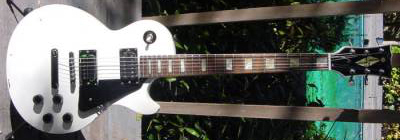
Vintage 1970’s Lotus Les Paul Electric Guitar
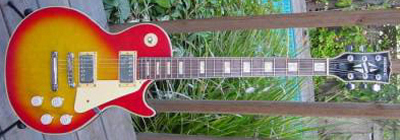
Vintage 1970’s Hondo II Les Paul Electric Guitar
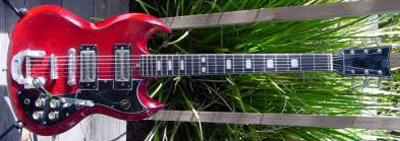
Vintage 1970’s Kay SG Electric Guitar
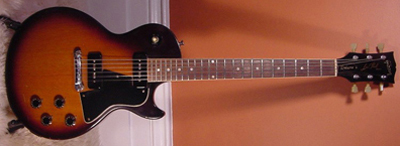
Vintage 1970’s Gibson Les Paul 55 Electric Guitar
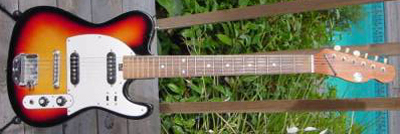
Vintage 1970’s Silvertone Telecaster Electric Guitar
INSPIRED BY MOSRITE
Here is a selection of Mosrite copies from the seventies, along with one original Mosrite. The GM Custom is actually all original Mosrite parts built by a former employee, Gene Moles, after the Bakersfield Mosrite factory closed. The Univox guitars are popular today because Kurt Cobain of Nirvana used one. I also have some additional Mosrite copies farther down this page, some listed under the 1960’s guitars and the best one on the 1980’s.
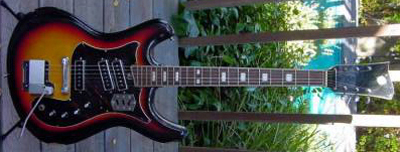
Vintage 1970’s Silvertone Mosrite Electric Guitar
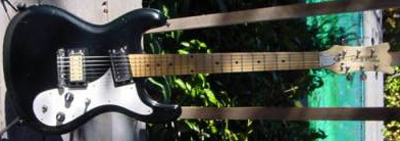
Vintage 1970’s Univox Hi-Flyer Electric Guitar
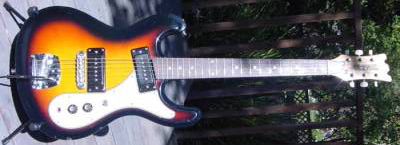
Vintage 1970’s Univox Hi-Flyer Electric Guitar
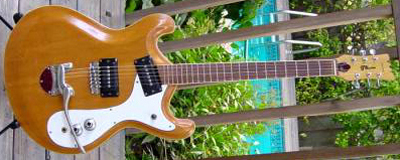
Vintage 1970’s Gene Moles Custom Mosrite Electric Guitar
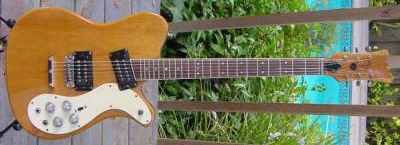
Vintage 1970’s Mosrite 350 Stereo Electric Guitar
If you like those guitars but can’t find a vintage one, Eastwood Guitars is currently reissuing several of these designs: check these Eastwood Mosrite reissues.
The Ventures were very popular in Japan and that is why so many Mosrite copies were made during the 1960’s and the 1970’s. Few of them, however, compare to the real thing as shown on the 1980’s guitar page.
KAWAI GUITARS
KAWAI was one of the better quality manufacturers to come out of Japan in the seventies. Here is a nice selection of their guitars. My favorite is second from right. This guitar is absolutely MINT. It belongs in a museum. Hmmmmm. I guess it is!
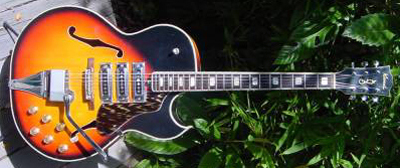
Vintage 1970’s Kawai ES-175 Electric Guitar
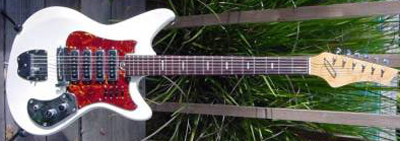
Vintage 1970’s Kawai Electric Guitar (with 4 pickups)
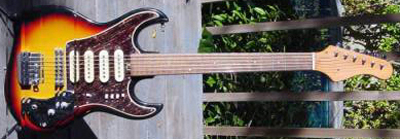
Vintage 1970’s Kawai Electric Guitar (with 4 pickups)
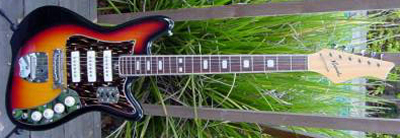
Vintage 1970’s Kawai Electric Guitar (with 3 pickups)
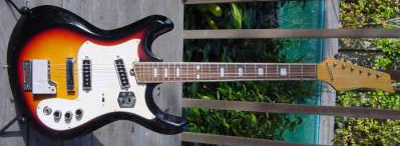
Vintage 1970’s Kawai Mosrite Electric Guitar
Eastwood – once again! – have reissued a legendary Kawai model, the Eastwood SD-40 Hound Dog, a fantastic re-creation of the Kawai used by bluesman Hound Dog Taylor.
MORE LES PAUL COPIES
Here are some additional examples of Les Paul reproductions from the 1970’s. On the left is a very nice Hondo Deluxe 748 Mark II. Flame top, set neck, humbuckers… all that you would expect from the real thing at 1/8 the price. Next to that a blonde Sekova, a sunburst Hyundai, a Tobacco Sunburst from Univox. Lastly is a fantastic Tokai Set Neck with the historic Sunburst Finish. This is an incredibly nice guitar. The 70’s Tokai’s go for nearly the same price as a real Gibson these days. Once you play one you’ll know why.
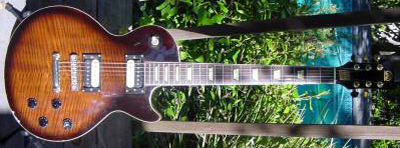
Vintage 1970’s Hondo Les Paul Les Paul Guitar (set neck)
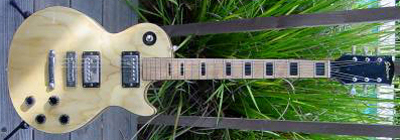
Vintage 1970’s Sekova Les Paul Electric Guitar
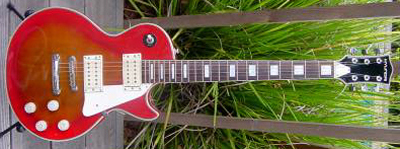
Vintage 1970’s Hyundai Les Paul Electric Guitar
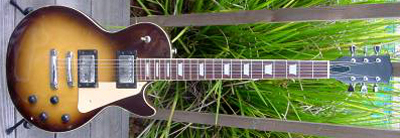
Vintage 1970’s Univox Les Paul Electric Guitar
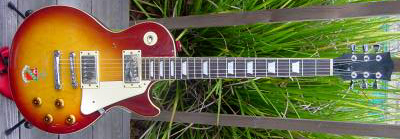
Vintage 1970’s Tokai Les Paul Electric Guitar (set neck)
MORE JAPANESE WONDERS
Here is a grab-bag of assorted 1970’s guitars, mostly from Japan.
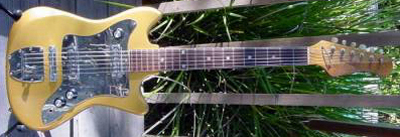
Vintage 1970’s Tele-Star Electric Guitar
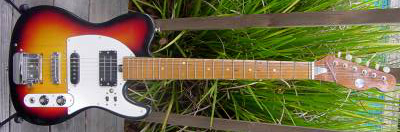
Vintage 1970’s Silvertone Telecaster Electric Guitar
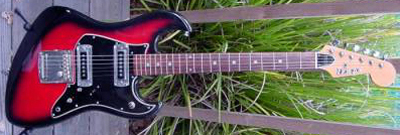
Vintage 1970’s Tempo Electric Guitar
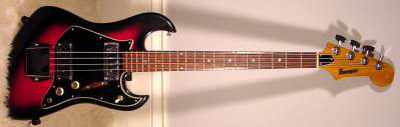
Vintage 1970’s Tempo Electric Bass Guitar
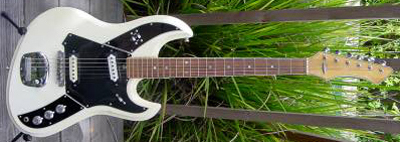
Vintage 1970’s Yamaha Burns Copy Electric Guitar
MORE MOSRITES
A few years back I wrote up a piece about my pursuit for the perfect Mosrite copy. Scattered across the 1960’s through the 2002’s guitar pages you will find almost two dozen different attempts. Here are some of the 1970’s acquisitions. On the left, a nearly perfect 1972 Mosrite Ventures Model. Mint. Next to that are a pair of Univox Hi-Flyers and a Silvertone Slider. This guitar is pretty cool because a) it has a wicked flame fiish and b) it has an individual slider volume for each pickup. This allows for a wide variety of tone setups because you can dial in as much or as little of each pickup you want.
Cool.Somewhere along the way I decided to build my own Custom Mosrite Copy. I wanted to put together a guitar that had the Mosrite look but was built for repeated abuse as a stage guitar. It started with as Silvertone shell, just the body and neck. I put Gibson Tuners on it for stability. Next I selected some wild vintage EKO screamer pickups that were extracted from a deceased EKO 700 4V. Then I had a custom pickguard made at WD Products in Florida. New pots, switches, bridge, etc and a few days locked in a room. Voila! A one of a kind Mosriteko.
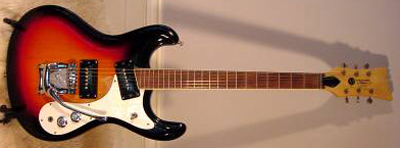
Vintage 1972 Mosrite Electric Guitar
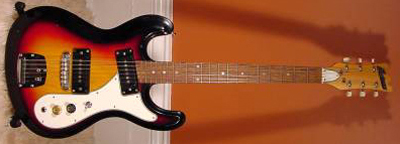
Vintage 1970’s Univox Hi-Flyer Electric Guitar
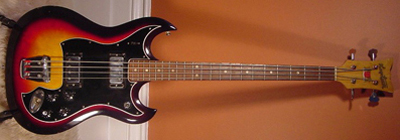
Vintage 1970’s Hagstrom Electric Bass Guitar
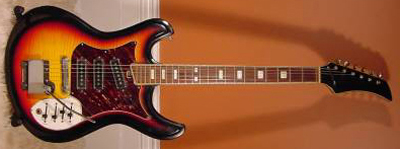
Vintage 1970’s Silvertone Slider Electric Guitar
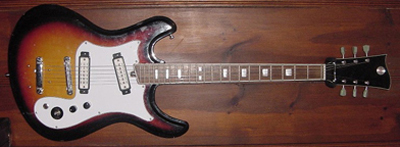
Vintage 1970’s Custom Mosriteko Electric Guitar
SOME FORGOTTEN GEMS
An early 1970’s Conrad Strat and a Lotus Les Paul. The Conrad and the Aria are extremely well build guitars while the Lotus is most certainly not. However, I have a Lotus on my 1980’s page that is fantastic! Next to that is an Inter-Mark frmo Japan. Well built guitar, MUCH better than most semi-hollows from this era. You can’t tell from the picture but this thing is HUGE! 18″ across the body where an LP is about 12″. next to that is an old Lyle SG.
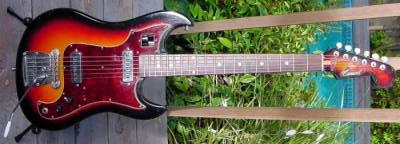
Vintage 1970’s Conrad Electric Guitar
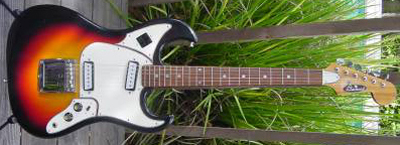
Vintage 1970’s Aria Burns Copy Electric Guitar
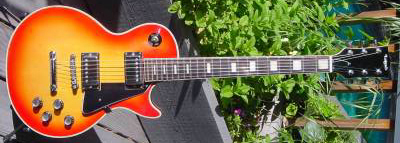
Vintage 1970’s Lotus Les Paul Electric Guitar
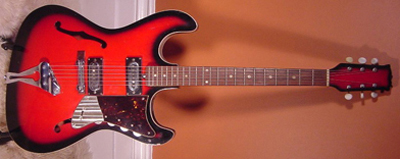
Vintage 1970’s Inter-Mark Electric Guitar
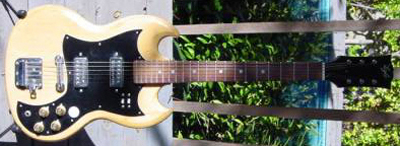
Vintage 1970’s Lyle SG Electric Guitar
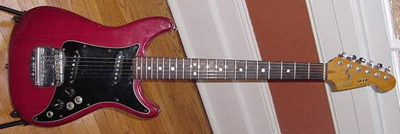
Vintage 1970’s Fender Lead II Electric Guitar
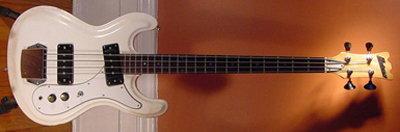
Vintage 1970’s Univox Electric Bass Guitar
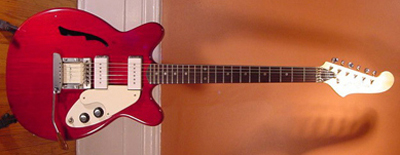
Vintage 1970’s Microfret Calibra II Electric Guitar
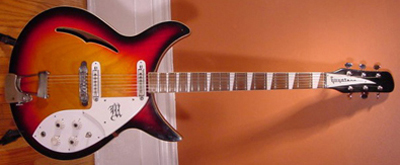
Vintage 1974 Guyatone Ricky Electric Guitar
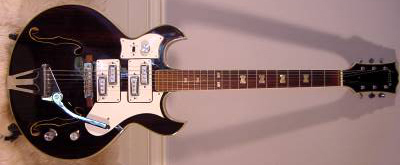
Vintage 1970’s Norma Barney Kessel Electric Guitar
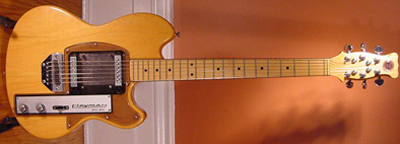
Vintage 1973 Hayman Made in England Electric Guitar
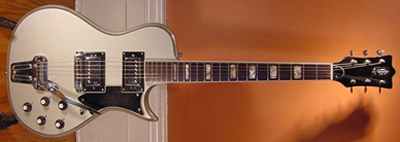
Vintage 1970’s JG Made in Italy Electric Guitar
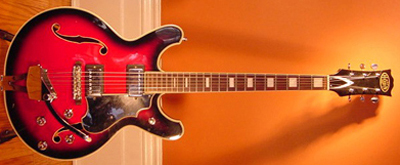
Vintage 1970 Hohn Electric Guitar
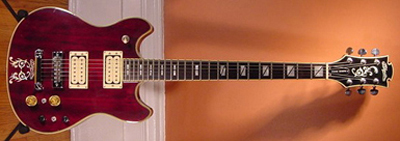
Vintage 1975 D
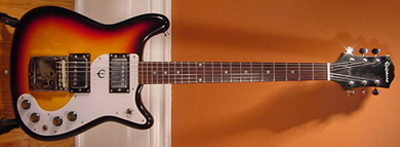
Vintage 1970’s Epiphone Crestwood Electric Guitar
I have a 1970’s guitar, had it for a few years. Not sure the quality or the value. It appears to be a Gibson knock off. It is a “Morris” electric acoustic blonde in colour. Could send a picture of the guitar if I could attach a file to an e:mail response. Thank you for your time and consideration.
sure, email a photo if you want.
Thirty years ago, I encountered a Framus Golden Television model. I loved the sound of it, but couldn’t talk the owner into selling. Bill Lawrence p/us and lots of tone switches. Endless twang.
I had an old norma 4 pickup that is super rare then got a Fender Lead 2 in 79 for my birthday and havent seen any around foreve.r if anybody has either one please contact me.
I have the exact sekova less paul!
I have a late sixties early seventies Framus 6 string electric in pretty rough shape. Is this something someone by interested in restoring or for a parts guitar?
i have a univox les paul guitar and i have no clue how old it is, it looks brand new. Can someone help me ?
I’ve got a Conrad 40080 that I’ve had since i was 7 or 8. Apparently, it’s some sort of Barney Kessel knockoff. It’s got weird “humbucker” pickups. I’m still trying to get information on what they are, and even the guitar itself. Any information is greatly appreciated.
hi,around the time of 1976-77 i was looking for my first guitar.at my local music shop the owner denny of “today’s music” told me about these copies by a company called encore.i went through the catalog and fell in love with an explorer copy.that christmas my parents bought it for me and it was absolutely an amazing guitar.i would put it up against any gibson,thats how well it was constructed.it was a set neck in a natural finish.i am now 49 yrs old and have been looking for this guitar for the last 15 yrs and cant even find one on ebay.any idea where i can find any info,photos or even one for sale on the internet.thanks,patrick
I’ve been trying to find price on a l-85 lotus guitar says not found .
pleas send me if you have
thanks
how much is the vintage 1970 crestwood worth used?
Can anyone unravel the mystery of this mystery guitar? Listed with photos in Craigslist, New York City, under musical instruments for sale, headline “Mediocre, no-name guitar needs you to rescue it from bad guitar karma.” ? Thank you !!
Hi,wonder if u can help,I have a Hayman 2020 and it seems to be a right mix,it has thin line body with twin humbucker p/u’s the head stock with the plastic hayman inserts has four extra post guides for the strings..The oddest thing is at the back where the serial number plate should be is open and there are no screw holes to show if there was ever a serial number plate on it.Any ideas as to year of manufacture or any info would be appreciated.Thanks
does any one know how much a tempo , electric Spanish guitar . from 71 to 75 would cost it is in perfect condition.
I have an interest in that 70’s JG italian guitar pictured above. Anyone know who owns it and if it’s available?
Hi,
I have a Harmonie H90 Delux 1971 guitar, and I’m looking for the value of it. Can you help me?
Thanks
I bought a uni vox phase 3 electric black &
white in 1975. I sold it to some guy at work for about $100 bucks 20 years later. Wish I hadn’t done that. Damn!!
I have what looks like a Vintage 1970’s Tokai Les Paul Electric Guitar (set neck), as pictured, with three minor exceptions: an extra switch in the middle of all the knobs, pearl inlay on the first fret, and a pearl inlay on the head in the shape of a diamond. Have you heard of this? It says Magnum on the head as well. Thanks, Bud
I have that exact same 1970 Hohn
(3rd from the bottom) that my grandmother bought me when I was 10 years old and wanted to take lessons.
I haven’t played since i finished those lessons
Any idea what it’s worth and the best place to maybe sell it?
Hi,
I am hoping you can help me with some information on the Morris Tornado xx80 acoustic round back guitar, or put me in touch with someone who can help. I was not very successful on the Morris website.
I recently purchased, second hand, the above model guitar and would like to know its year of manufacture, an approximate value, all it’s technical information (what it is made of etc).
The number on the back of the neck at the top is 270085.
The number on the front of the neck near the sound hole is 81108
Hoping you can help me.
Many thanks
Simon Smith
I have a circa 1970 Kawai 4-pickup guitar given to me new as a Christmas gift. It is in very good shape and everything works, including all 4 completely metal-encased pickups that have a bit of gold foil over each opening. Any chance you could offer some additional insight on what I have if I send a picture?
I have a vintage bass guitar, with case. I am having a hard time identifing it. It had no serial number, only says JAPAN on the back plate. Pretty sure its from the 70’s. All black with four strings and only two knobs. Please email me with any helpful advice.
I HAVE AN EARLY 70S CONRAD LES PAUL KNOCK OFF BLACK W/ HUMBUCKERS & PEARL INLAY TO BOOT! IN PRISTEEN CONDITION! IS THERE A WAY I CAN DATE I AND FIND OUT WHAT IT’S POSSIBLE WORTH IS? ANY HELP WOULD BE GREALY APPRECIATED!!!
FY: I Epiphone was bought by Gibson in the late 50’s. Epiphone guitars were made on the same line as the Gibson. The Epiphone Guitars were less expensive and sometimes a bit more intricate compared to the Identical Gibson model. Epiphone was distributed to dealers that could not get the Gibson Line but wanted a “Gibson” to compete with Fender. In the early 1970’s Gibson had moved the production of Epiphone to Japan as a lower cost guitar to compete with the Japanese imports. The same Japanese company who made Epiphone also made Voxton Guitars for Vox.
I have a Domino bass guitar, single pick up ,neck position and oddly not in their catalogue online. Anyone one know if this was American made early model ,as there is no other markings than Domino on headstock. Chunky little neck, medium scale bass .a fun piece o history to jam 60’s and 70’s on. !!!!
Hello… different category of guitar, but I still believe it’s lawsuit era: An SW500 Western Deluxe ZEN-ON Acoustic. Clearly a remake of a Martin D-35 with very nice bracing, ebony fretboard, high end tuners and sitka spruce (I believe) top and rosewood side and back. What is strange about this (and I’ve only seen one other on the net) : Brass (or bronze) nut and saddle and pins. Bought this in a pawn/junk shop in Paris for a song. Anyone have any information on this maker? Please get in touch. Love this story – the Japanese vintage knockoffs – because they are so high quality and yet tell a very interesting slice of industrial/global history. Appreciate your site. MR
I posted a comment in March 2014 and am still wondering about that 70’s JG pictured above. Does anyone know who owns it and if it’s available. Please let me know.
I have a black Hayman 3030. Would really like any info about it.
Do you know what year it would be and how many were made.
Thanks
I have a late 70’s Lotus LP copy that I rescued and gave new life and it is a killer sounding guitar I also have another rescue a Quest Atak 1 and it is odd in the fact that the bridge pickup is a single could while the bridge is a hum bucker this guitar also rocks …. I love the 70’s – 80’s Japan made guitars better than just about any guitars ever made and had a 80’s Yamaha SBG 3000 back in the 80’s and wish I had never got rid of it as it was the best guitar I’ve ever played but at the time someone fell on out bass players guitar and broke the neck so with only a few hours before we were scheduled to play I traded the Yamaha for a new Spector bass. I’m still kicking myself.
I have an Avila BC RICH electric guitar I don’t know anything about this guitar please let me know if someone knows or have seen one of these guitar.
Thanks.
I have a Hondo 748 Deluxe Markll in wonderful condition sound wonderful to I think ithas Dimarzio pickups on it and it has Gover tuners well made it has the GIBSON headstock on it and the end of the frets are covered with the binding it is dark cherry can anyone tell me what there worth thanks.
i have a nice kent Keb3 black electric in great shape , what’s the value please
I also have a 1968 black beauty z that has gold plated keys bridge ,everything and pearl inlays ect, and even the case it was bought in .
Could you give me a off the top value , has Japan written on the back of the neck plate written on it .
I you want I can send pictures if you email me at davesbizz@aol.com please put kent guitars in the subject line so I know what it about , I don’t see a way to send pictures in here .
Thanks
Dave
i have one Eikosha bass guitar japan made…. but i never sean any website about this… do you have any info??
I have a ’76 Orange stratocaster that sounds better than any Fender Ive played ( I havent played any custom shop ones 😉 but the tone and feel is awesome!!!
Zen-on was made by Yamaki
I’m trying to figure out if my guitar is worth anything? It’s an old Aria made in Japan, how do I know whether it is Lawsuit model or not?
Thanks Scott I would like to show you a picture of it, it’s beautiful!!!
Hi, I purchased a older S G style 6 string guitar from a garage sale and am having a hard time trying to find out who made it. I do have a few clues though. There are a couple stickers on the back of the headstock which give me the 7 digit serial number and where it was supposedly made which was Korea. Then on the front of the headstock there is a mother of pearl inlay of a butterfly. Can anyone tell me where or who this guitar came from or what company might have? This guitar has four knobs on it for volume and tone as well as two slide switches. It also has a tremolo which is missing the bar
I have 2 of those Tempo guitars. I thought they more likely to have been from the 60’s by the shape and the sound. They are real surf monsters. This is the first place I’ve ever seen them other than my two. Thanks for sharing.
HI, I have a mint condition Hondo 11 acoustic guitar Model Number- HJ200A
can anybody tell me what it is worth, it is Korean made in the 1970’s.
6 steel strings. Really nice guitar.
THANKYOU.
Loz Netto plays a black LP style guitar that looks and sounds terrific in the youtube video at the end of this post. At 1:01 minutes you can see the headstock inlay but no name. Driver’s Seat is a great song largely because of his riffing and tone. Thing is try as I may I cannot get any info on this guitar.
Any help in identifying it would be appreciated.
Dave
I remember !! I had the Sekova Les Paul … really good guitar, just a bit heavy ..
I have a 1972 Lyle Bass Electric (red) that looks like the SG. Bought it new in 1972 from the local Gibson guitar dealer in San Clemente California. He was a new distributor of them. he also carried Gibson guitars. I noticed you didn’t have a picture of one with your picture of the six string version. I am selling it. I have the original but worn case.
It plays very well still. Has a few nicks from playing in my high school band 45 years ago.
Hello, I am going to buy a circa 1975-76
Greco MIJ Telecaster vintage Fender lawsuit electric guitar, Cosmetics 8 of 10 and plays 10 of 10
SN;I783445
Made in japan
Specs:
Ash body
Maple neck
Lindy Fralin vintage spec bridge pickup
Dimarzio Twang King neck pickup
Bone nut done by Arie Hipolito
String through modification done by Arie Hipolito so it can fit standard Tele bridgeplates
so it’s told to me, not in perfect shape but it does have the numbers on the back and says made in japan, is there a chance it’s vintage
Is there a chance this is not a law suit I would love to send pictures if it’s ok…
I have a 1970 yamaha electric guitar,that a friend of mine had made for himself.I believe it is a one of a kind. there is no model or serial no. only the date of manufacture on the neck,right next to the body. It is a beautiful guitar and sounds wonderful. My friend died several years ago,and willed it to me.can I send you some pictures. please email me if at all interested. Thank you Jim granheim
I’m picking up a 70’s (?) Lyle 335 copy today…..can’t wait!!! It’s almost mint but missing the “whammy bar”.
FYI: I get tired of people perpetuating the term “lawsuit era” It has to be the most abused term in the sale of vintage guitars. Basically, Nordin (Gibson’s parent company at the time), called Ibanez to task on using the open book headstock design. No one was sued, no companies were shut down or bought out over this…. it was settled out of court. It was no big deal. Other Asian/Japanese companies, on their own, discontinued using the design. Certain sellers on certain websites seem to use this term as a way to justify the values of items being sold. So buyers beware of such terms. Example: Lyle brand of guitars are considered very rare. However it does not increase their value. The 335 copy I’m picking up today cost me $200cnd…..a fair deal but not a great deal. For that price I would have preferred to get a case with it or to have a “complete” guitar (it’s missing the whammy bar).
Anyhow…keep on rockin’
Scott B.
In response to Jeff Burgess – June 22,2014. Hohn guitar.
I took guitar lesson in Calgary Alberta 1970 at ABC MUSIC. The studio was on eighth avenue across from the Hudson Bay. I would ride the bus at night to get to and from class. I was 14 years old. The instructors name was Robert Hohn. He contracted a Japanese guitar builder to produce these guitars. ABC HOHN is on the headstock. (Note the connection with ABC MUSIC) They were available in three starburst colors. Red, Blue and Green. His students were the first to buy these guitars complete with Amp for $250.00. I have the green version. Hohn would teach the standard cords, scales and ‘HOT CROSS BUNS’. The last five minutes of class were the best. Hohn being a rock and roll musician would then show us how to play some real music. Many great memories.
This guitar is one of the best playing guitars I have used. I still play this guitar all the time. Never looses tuning. Had the truss rod set once 15 year ago. No other service required ever.
I would imagine only a hand full of these guitars exist today. As to the value??? Some guy in Calgary tried to sell me a blue one about 12 years ago for $500.00 but it was rough. At that time I thought I would like to have one in each color. Did not buy it.
Hope your readers found this to be interesting.
i have a cherry red lotus es paul prob. from late its exactly like the one on the top of this page except cherry red no number\s on it what do i have?
this is to PATRICK MCGREAL, I have a vintage encore les paul I believe it is model E49H, let me know in case you are still looking for one.
Aloha!! I have a Lyle 335 es serial# 18866 honey burst, ivory colored binding all original guitar except for the strings. If anyone is interested, give me a heads up!! Thanks, Verge
I have the exact JG silver Les Paul Guitar pictured above. I bought it new in 1970. What would be an approximate value of this guitar?
hi there…. i have a eikosha P bass guitar in a good condition but i dont know where to find a date of manufacturer.. there only have a ekosha word at headstalk and made in japan at the plate
just grab a bass without brand buat at the plate have a number G760123 matsumoku made in japan
i’m wondering about my headstock says RM tempo (e335 copy),the tremolo arm has black infill in cast aluminium.the plate for bolts for neck just says japan.
I have a 1974 Carvin, I believe is a CM65,but I am not sure. It has every option you could get on the guitar,coil splitters,stereo connections,and mother of pearl inlays. The serial number is 8348. could you give me any information on what it is worth,or anything?
Thank You in advance
I have a lotus electric guitar…only about 30 inches long …4 black buttons and a rhythm tremble switch….amber finish with a lighter colored face….in good condition…approx value..?
I recently picked up an early 70s Pan Trini Lopez copy guitar serial number 2149886 any info on these?Thanks!
Was gifted what appears to be a very rare guitar. Lyle L – 30 Martin Knock off with 1965 Grover locking tuners. Plays like a dream. Can’t find anything online about it or any mentions from anyone in the biz. Everyone who plays it drools. Any clue what this magic axe is?
I was just given back my Dads late 60’s or 70’s era electric guitar. It says HF made in Italy. It has a 0 fret, 335 Gibson design, Brisby bridge, bolt on neck, roller brisge, well bound, red with cream trim, the truss is adjusted at the heel, rosewood fret board, inlay on first fret. Can anyone tell me about this guitar? I have no information and am not finding anything on the internet. Thank you.
i dunno,, iam 63 and been playing for over 50yrs,i have had gibsons,fender,ibanez,blah blah,, to me i pick up a new mex strat or a studio and ,,,comon after playing fer so long they dont have magic ! either ya like the it or not,no 50s or 60s magic original guitar hold anything much more,, ooooooo 60s tele has it !! naaaaaaaaaaa,,, ya just paid ,,and boy ,, if i took it away and gave ya another without knowing really ??? ya that good??
Could anybody what would be the price of a Shaftsbury bass guitar 1970’s in reasonable condition. anthony.
Has anybody on here heard of Ariana guitars?
I have an option to buy one….just looking for info
Hi there, my father bought me an old 1070’s EKO guitar. The only number I can see in the inside is 140180
I have a photo of all the Italian Writing on the paper inside the guitar but alas am not able to translate. Does anyone have email I can upload it too?
Thank you kindly for your pending help,
kind regards,
Glenn Coombs
South Australia
0412 644042
I have a lespaul pearl initation that you do not talk about or it’s the only brand that has been in conflict with Gibson
I just got one of that HOHN guitars in red here in Guadalajara Mexico! Any chance to someone tells me if it is worth to restore it ? Because it doesn´t have the hardware, so I am in a little bit of trouble..
have Morris sillvertone or telecaster?60-70s maybe?why only one neck pic??not found it any where,somebody know something ??
I have a very rare Hondo Formula 1 Black Set Neck H783 /With a Kahler and Dimazio pick ups and Grover Rotomatics it is all original yerry clean and plays perfectly 1 of 70 $?.
Quality posts is the crucial to be a focus for the users
to pay a visit the website, that’s what this web page is providing.
I found a Lotus LP style guitar in the guitar shop the other day and after not finding anything about it I was scared, but I plugged it in and it sounded and felt amazing! Can’t believe how lucky I was to have discovered it. Only problem is I have no idea when it was made? Can anyone help? The only thing on the guitar that would be able to help date it is the model number L555 and a sticker that says made in Korea.
Omistan Ibanez Concord 12k v1974
I have a Les Paul custom copy “Unbranded”. Black beauty, pre lawsuit or lawsuit? All gold “plate” hardware with Gakki hard case. Any info on this unbranded gem? Pic’s on demand!…..plays better then my Fender 1996 Srat 50th Ann. LoneStar.
I have a blue Hohn, looks exactly like the photo in another colour. Wondering what it’s worth if anyone knows or the history of the guitars?
Any info on corona SG copy circa mid seventies ? Bought from an Adelaide store about 73/74?
Looking at a ’77 Ibanez 2460 with Grover Tuners. These would not be original to this model, right? If not, does anyone know if the Grovers might be better?
I have a Shaftesbury resonates guitar 1960.s does anyone know anything about this guitar
I have a ASPEN double cutaway sunburst guitar. It came with USA DiMarzio pickups. It has the same shape headstock as LOTUS. I think it’s a 1977 because of the sticker on the neck heel. It has a huge baseball bat neck. I’ve never seen another one. Anybody have any info????
Anyone heard of Alcivar guitars. I have a Les Paul copy that I purchased in 1975.
WOW! Have you guys fucked this site up and your guitar line stinks.
I have an Aria Les Paul Gold Top (not Pro II). Got it in around 1990, was already pretty road worn so thinking 1970’s. Good weight, excellent humbuckers. No serial numbers that I’ve seen, has Japanese symbols on the neck heel. Still my number 1. Would be keen to hear any info
Why viewers still use to read news papers when in this technological
world everything is presented on net?